
"coffee growing in Africa"
5000 article(s) found

Western Uganda Coffee Bean Ruwensori Mountain Flavor Taste Introduction
Ugandan coffee beans have a unique flavor and fragrance, which is very suitable for making Italian and other flavors of coffee. More importantly, Ugandan coffee beans are strictly screened according to international market standards to ensure their high quality and pollution-free characteristics. Africa is home to Arabica and Robusta, two major coffee varieties, while East Africa enjoys a plateau of water and the pearl of East Africa.

Coffee knowledge
Coffee is a kind of drink, which gives the public the impression that it is black, bitter, sleepless and excited. The coffee beans we see in the coffee shop are tea-brown, which belongs to roasted coffee beans, while the color of the coffee liquid is amber.

Flavor and taste of Ugandan coffee beans the manor area introduces the types and taste of coffee beans.
Origin: Uganda product model: AA.A2.BP.B4.CS Organic Uganda Burkinsu uganda bugisu AA 18 mesh Uganda is a landlocked country in eastern Africa, across the equator, bordering Kenya in the east, Tanzania and Rwanda in the south, the Democratic Republic of the Congo in the west and Sudan in the north. Most of the territory is located in the Central African Plateau, with lakes, with an average elevation of 1000-1200 meters. There are many lakes and plateaus in the mountains.

Which countries in Latin America grow coffee?
Which countries grow coffee in Latin America? in 1721, French naval officer Gabriel Mathieu de Clieu brought the first coffee sapling from Africa to the Latin American island of Martinique, which is the origin of coffee cultivation in Latin America. Because France at that time was under the rule of the Bourbon dynasty.

The Origin of Coffee the world's first coffee tree was found in the Horn of Africa.
The origin of coffee the world's first coffee tree was found in the Horn of Africa. Local indigenous tribes often grind the fruit of coffee and knead it with animal fat to make many ball-shaped balls. These indigenous tribes use these coffee balls as precious food for soldiers who are about to go out to battle. At that time, people did not understand the performance of coffee eaters.
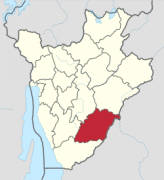
What are the taste characteristics of Burundian coffee beans, Heart of Africa? Challenges to the coffee industry in Burundi
Burundi is a small mountainous landlocked country in east-central Africa located between Rwanda Tanzania and the Democratic Republic of the Congo. East Africa is famous for producing quality coffee, and Burundi is no exception. Although the production here is very small compared with other African countries, coffee farmers in Burundi pay great attention to detail. Burundi has the second highest per capita GDP in the world and is considered to be
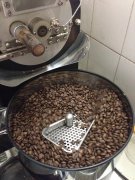
The Origin of Coffee the world's first coffee tree was found in the Horn of Africa.
The origin of coffee the world's first coffee tree was found in the Horn of Africa. Local indigenous tribes often grind the fruit of coffee and knead it with animal fat to make many ball-shaped balls. These indigenous tribes use these coffee balls as precious food for soldiers who are about to go out to battle. At that time, people did not understand the performance of coffee eaters.

Kenyan boutique coffee in East Africa the latest details of Kenyan coffee
Kenya, located in East Africa, is one of the major coffee producing countries. More than 6 million people in the country are engaged in the coffee industry, mostly in the form of a combination of small farmers and cooperatives. Coffee trees in Kenya are mostly planted at 1400 m-2000 m above sea level, and the growing areas include Ruiri, Thika, Kirinyaga and Mt. Kenya West, Nyeri, Kiambu and Muranga. With Mt.Kenya

An introduction to the differences in the description of coffee bean flavor in Asia, Africa and America
Coffee bean flavor description of Asia, Africa and America Central and South America is the largest coffee producing area in the world, where there are numerous boutique coffees. Take Colombia, Guatemala or Brazil as an example, good coffee is enough to make people dazzling. What is the resource advantage that makes Central and South America so good? French naval officer Gabriel Mathieu in 1721

Introduction to the characteristics of Ugandan boutique coffee bean flavor and taste manor with persistent fruit flavor
Organic Uganda Burkina Faso uganda bugisu AA 18 mesh Uganda is a landlocked country in eastern Africa, across the equator, bordered by Kenya to the east, Tanzania and Rwanda to the south, the Democratic Republic of the Congo to the west and Sudan to the north. Most of the territory is located in the Central African Plateau, with lakes, with an average elevation of 1000,000,000 meters above sea level. There are many lakes and plateaus in the mountains, which are known as the water villages of the plateau. The western branch of the Great Rift Valley of East Africa
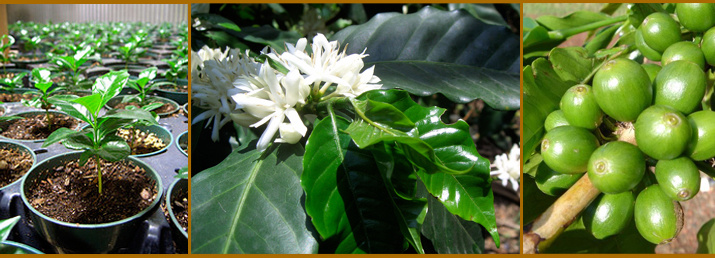
African coffee boutique manor South Africa's coffee trees are derived from Kenyan fruits like coffee from Central America.
South Africa is fragrant with less acidity, reminiscent of Central American coffee beans. Coffee production in South Africa (South Africa) is mainly in the northeast of the country, from Natal between Transvaal and Mozambique, extending northward to Transvaal, with a southernmost limit of latitude 30 south. Further south, it cannot be caused by early frost.

The growing process of coffee beans the growing conditions of coffee beans
At present, coffee trees are mainly planted in Arabica, Robusta and Liberia. Arabica species produced in Elaraby Sinia (now Ethiopia) have the highest quality of the three major tree species, accounting for 2/3 of the world's coffee production. Coffee beans are oval and flat, characterized by fragrance and good quality. Robusta seeds are produced in Congo, Africa, with strong disease resistance, high temperature resistance and fruit.

Organic washing processing of coffee beans in Xipi Waterfall, Uganda
The cultivation of coffee in Uganda is all small-scale family operation. The livelihood of 25% of the population is closely related to coffee production. About 500000 farms grow coffee, but mainly Robster. Robster accounts for 90% of coffee production, and the remaining 1 is Arabica coffee. Arabica and Live Buster are harvested from October to February of the following year. Ugandan coffee

Introduction to Uganda's fine coffee beans with a delicate taste
Ugandan coffee beans have a unique flavor and fragrance, which is very suitable for making Italian and other flavors of coffee. More importantly, Ugandan coffee beans are strictly screened according to international market standards to ensure their high quality and pollution-free characteristics. Africa is home to Arabica and Robusta, two major coffee varieties, while East Africa enjoys a plateau of water and the pearl of East Africa.

The planting conditions of high-quality coffee beans and common sense coffee trees
The origin of the coffee tree is Ethiopia in Africa. In botany, coffee trees belong to the evergreen trees of the subgenus Rubiaceae, and coffee beans, commonly known as coffee beans, are actually the seeds of the fruit of coffee trees. They are called coffee beans only because they are shaped like beans. Climate is the decisive factor for coffee cultivation. Coffee trees are only suitable for growing in the tropics or subtropics, so latitude 25 degrees south and north.

Ugandan coffee beans with a delicate taste and unique flavor
Ugandan coffee beans have a unique flavor of delicate taste, which is very suitable for making Italian and other flavors of coffee. More importantly, Ugandan coffee beans are strictly screened according to the standards of the international market to ensure their high quality and pollution-free characteristics. Africa is the hometown of two major varieties of coffee, Arabica and Robusta, while the eastern Africa enjoys a plateau water hometown and a pearl of East Africa.

Introduction of Ugandan Coffee Flavor producing area with delicate fragrance
Ugandan coffee beans have a unique flavor of delicate taste, which is very suitable for making Italian and other flavors of coffee. More importantly, Ugandan coffee beans are strictly screened according to the standards of the international market to ensure their high quality and pollution-free characteristics. Africa is the hometown of two major varieties of coffee, Arabica and Robusta, while the eastern Africa enjoys a plateau water hometown and a pearl of East Africa.

Introduction to varieties of Ugandan Coffee produced by Flavor description, Grinding scale and Taste treatment
Description of Ugandan Coffee Flavor description, Grinding scale, Taste treatment Variety introduction in Uganda Coffee production area varieties are generally good as long as raw beans are not 100 or yellowed, with low ripe fruit aroma, such as red wine taste, and thick mellow thickness, similar to some Kenyan beans with low flavor, but also with a mild soil flavor, so in terms of flavor characteristics.
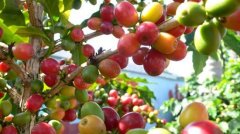
South Africa is fragrant with less acidity, reminiscent of Central American coffee beans
South Africa is fragrant with less acidity, reminiscent of Central American coffee beans. Coffee production in South Africa (South Africa) is mainly in the northeast of the country, from Natal between Transvaal and Mozambique, extending northward to Transvaal, with a southernmost limit of latitude 30 south. Further south, it cannot be caused by early frost.
Walking into Africa, the hometown of coffee
One thing I am very curious about is that coffee comes from Africa, but in many parts of Africa, especially in small towns and villages, few people drink coffee. This time I visited the hometown of Uganda, which is rich in coffee, and this question can basically be answered. There are many coffee farms in the village of Budadiri in Mombali, a small town near the Kenyan border in Uganda.